

What Is the Difference Between Capacitive and Photoelectric Sensors?
Detecting objects can be tricky; choosing the wrong sensor leads to errors and delays.
Capacitive sensors detect materials by change in capacitance, while photoelectric sensors use light to detect objects.
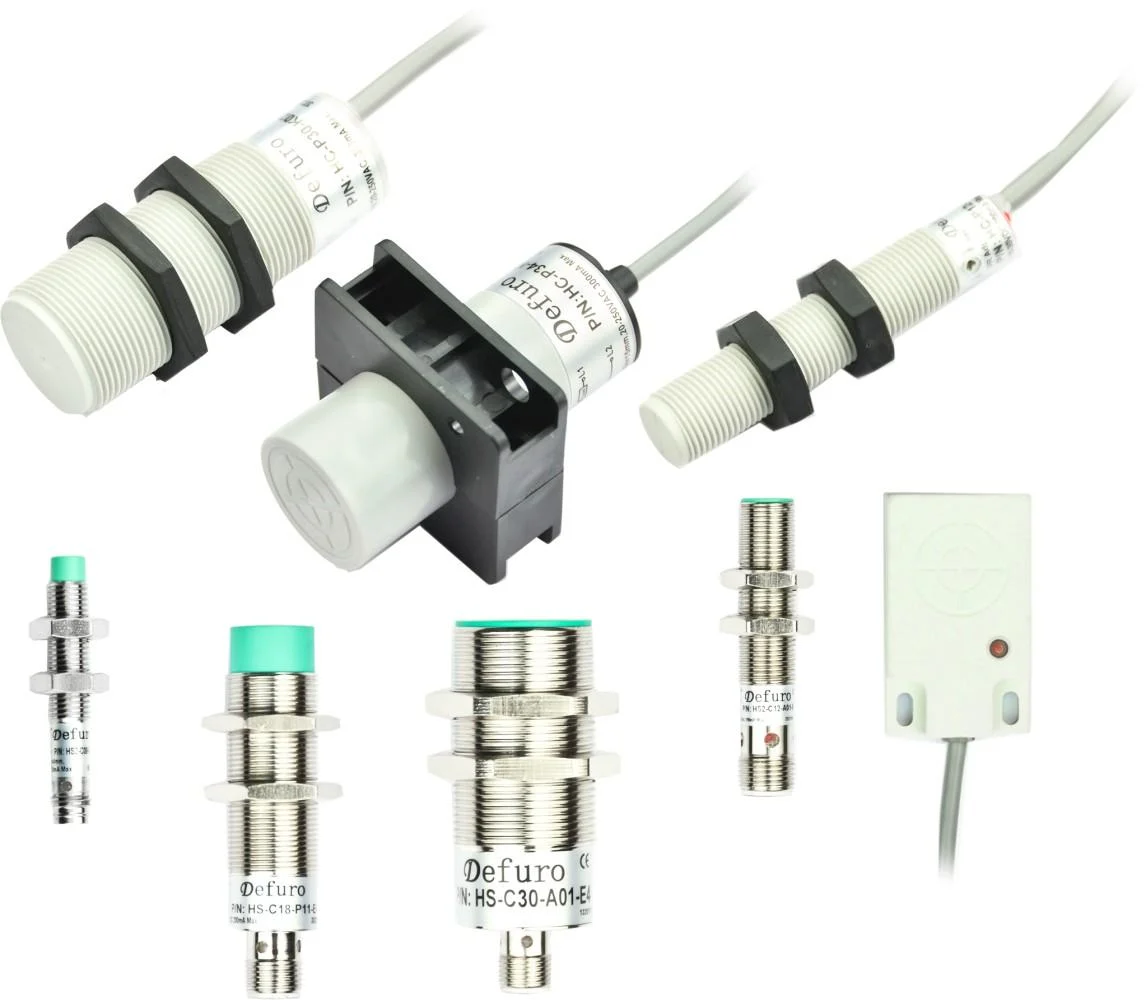
Capacitive and photoelectric sensors serve different needs.
Capacitive Sensors
Capacitive sensors detect any material, solid or liquid. They are useful for monitoring levels, detecting plastics, grains, or powders. Sensitivity adjustment is key to avoid false readings.
Photoelectric Sensors
Photoelectric sensors detect objects through a light beam. They offer long-range detection and high speed. These sensors are common in conveyor systems, packaging lines, and safety monitoring.
| Feature | Capacitive Sensor | Photoelectric Sensor |
|---|---|---|
| Target Material | Any material | Any opaque object |
| Detection Range | Short | Medium to long |
| Sensitivity | Adjustable | Fixed or adjustable |
| Typical Use | Level detection | Counting, positioning, object detection |
I often combine capacitive and photoelectric sensors in production lines to achieve both material detection and fast object counting. This combination reduces errors and improves throughput.